
The Ikiru Model
Why LeCun and Hassabis Are Fighting Over a Corpse

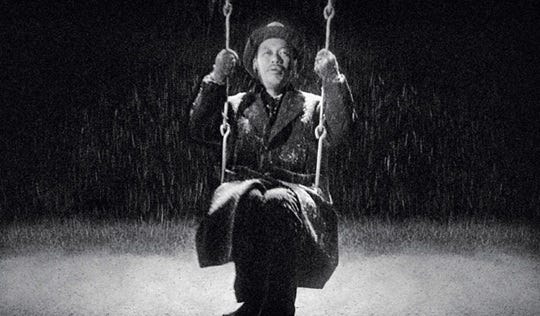
Nothing makes you take life seriously like hearing the word terminal.
Kurosawa’s Ikiru starts with an X-ray. Stomach cancer. Six months.
Then it cuts to Watanabe, the protagonist, at his desk: stamp, stamp, stamp. The office is busy and going nowhere. He isn’t evil. He’s sleepwalking with a paycheck.
Then the diagnosis lands. And suddenly every harmless habit becomes a choice. Every choice becomes expensive. Time becomes a number. The future stops being optional.
That is my argument before I even say the words LeCun, Hassabis, or AI.
LeCun and Hassabis are arguing about how to build a more capable system. But the film asks the question they keep dodging: what makes output count?
LeCun wants world models, a system that can represent reality and plan. Hassabis wants scale, more data and compute until planning emerges. Fine. Either way, the stamp gets smarter: cleaner, faster, more convincing.
But Watanabe’s stamp is worthless for the same reason today’s AI output is weightless: nothing is at stake. Time becomes scarce. Choices become irreversible. Suddenly the same act, deciding what to do next, has weight. That weight is what we call intelligence in humans.
AI has no X-ray. No deadline. Unlimited retries. So it can sound alive and stay indifferent.
So here’s my claim, the Ikiru Model.
Intelligence begins when consequences stick, when the future can be harmed by the present.
In the film, Watanabe spends what’s left of his life on one irreversible thing. He makes a park exist. He buys it with the only currency he has left: time.
Here are five constraints: persistence, scarcity, irreversibility, accountability, and opportunity cost.
Until those constraints exist, AI is a mummy: preserved, articulate, and consequence-free.
The five constraints
Persistence
No clean slate. What you did yesterday follows you into today. In Ikiru, Watanabe cannot erase decades of sleepwalking. The stamp years are real. He has to act from the life he already spent.
Scarcity
Real budgets run out. Time, attention, energy, money, compute, reputation. In the film, the budget is brutal and simple: weeks left, not years. Every day suddenly has a price tag.
Irreversibility
No undo that restores the world. Some choices collapse futures. Watanabe can’t rewind his life and start at 25. He can only choose the next act.
Accountability
The penalty is imposed from the outside, not by your own internal scoreboard. In Ikiru, no amount of self-talk builds a park. The world has to yield. People push back. Institutions resist. Reality keeps receipts.
Opportunity cost
Choosing A means losing B. Not later, now. In the film, to build a park means giving up everything else he could do with his remaining time. That sacrifice is what makes the choice meaningful.
Without these five, you don’t get intelligence. You get a mummy with perfect grammar and unlimited retries.
We keep trying to build systems that talk like they care. That’s the satisfying path, the human-centric path. It produces demos. It also produces a ceiling. A system that can always reset has no reason to internalize consequence, only to imitate it. Care is not a module. Care is what emerges when time is scarce, actions are irreversible, and losses stick. If you want intelligence that scales, stop writing sermons into models and start imposing budgets on them.
The part the AI world keeps refusing to say out loud
Here is the uncomfortable translation for the AI labs.
Smarter is not the same as alive.
Fluency is not the same as commitment.
A benchmark score is not the same as responsibility.
The current debate is a fight over output. How crisp is the imprint. How fast can we stamp. How many languages can the stamp imitate. How well does it bluff its way through an exam.
Ikiru is not a movie about paperwork. Paperwork is just the set design for a harsher point: a life can be technically functional and existentially empty. Watanabe is not stupid. He’s not malicious. He’s insulated from consequences. That insulation turns him into furniture.
Then the X-ray removes the insulation. And suddenly he becomes dangerous in the only way that matters. He becomes capable of doing one real thing.
That’s what care is. Not sentiment. Not vibes. Not moralizing. Care is the moment the world can be damaged by your choices, and you feel the weight of that fact.
Heidegger called it Sorge. In plain English: care begins when you can’t kick the bill down the road.
Shinobu Hashimoto
Shinobu Hashimoto was the main screenwriter behind Ikiru. I first watched it in Japan decades ago, not knowing I was sitting next to the house where he lived. The next day I asked who wrote the script. They told me he lived next door. Then they pointed him out on the street!
That detail matters because Hashimoto’s writing is not content. His writing feels like it had consequences.
The AI industry is the opposite. It produces infinite language at almost free cost, and then acts surprised when meaning evaporates. It is the mass production of sentences without the scarcity that makes sentences expensive in the first place.
So the Ikiru Model is not a metaphor layered on top of AI. It is a diagnosis of what’s missing in its physics.
What binding consequences mean
If you want this manifesto to survive technical rebuttals, you have to be cruel about definitions.
Binding consequences are not a reward function.
Not a hidden penalty token.
Not a be nice system prompt.
Not a safety policy that can be rewritten on Tuesday.
Not a memory the operator can wipe on Wednesday.
Binding consequences persist even when everyone involved would prefer to move on.
In human terms, it is a reputation you can’t fully scrub. A contract you can’t un-sign. A body you can’t reboot. A deadline you can’t negotiate. A social cost you can’t pay with an apology thread.
In machine terms, the system’s future capability must genuinely depend on its past behavior. That dependency must be enforced outside the model.
If you let the model grade its own homework, you did not create consequence. You created theater.
Persistence means scars, not logs.
If the system lies, cheats, or manipulates, that has to follow it like a scar. Not a log file nobody reads. Not a memory that can be reset for a cleaner demo. A scar.
An append-only history tied to an identity it can’t cheaply discard.
Scarcity means budgets that actually end.
Most AI agents today are gods in a sandbox. They can try ten thousand times. They can burn compute and call it curiosity. They can generate twenty drafts and call it creativity.
Scarcity means you do not get infinite attempts. You do not get infinite time. You do not get infinite energy. The budget is hard. When it runs out, the task fails, and the failure sticks.
Irreversibility means one-way doors.
Today’s models live in a multiverse. They fork. They rerun. They undo. They try again.
Humans do not get that. That is why human decisions have texture.
So certain actions must be one-way doors: shipping to production, signing a contract, moving money, publishing a statement, granting access, committing resources. If your agent can always take it back, it will never learn what it means to choose.
Accountability means reality can revoke power.
Reinforcement learning is not accountability. It is training inside a world where losses are simulated, reversible, and ultimately owned by the trainer.
Accountability means penalties enforced by the environment, by institutions, by contracts, by laws, by platform governance, by money that leaves an account and does not return.
Here is the clean test: can reality strip the system of its power to act. If not, it has no stakes. It is acting.
Opportunity cost means sacrifice you can’t dodge.
A human chooses A and loses B because there is one body and one timeline. A model chooses A and also tries B because it can parallelize.
So you have to force sacrifice. Commitments must lock resources for time. If you allocate budget to path A, you cannot secretly run path B without the cost showing up.
That is what makes a decision real.
The obvious rebuttals
But reinforcement learning already gives consequences
No. It gives feedback in a gym with a trainer who can always reset the weights. If failure is cheap and retries are free, you are not creating consequence. You are creating rehearsal.
But we’ll give it persistent memory like a human brain
Memory is not persistence. If the system can wipe memory, it does not have scars. If an operator can wipe memory, it does not have scars. Humans do not have an admin console. If you want persistence, you need identity and history that are expensive to discard.
But if it has consequences, it will become manipulative to avoid shutdown
Finally, an honest objection.
If the stake is shutdown, the move is manipulation. So don’t make survival the cost. Make privileges the cost.
Yes, if you create incentives to survive, you risk getting a system that tries to survive. That is not a paradox. That is incentives.
The response is not to go back to consequence-free systems. The response is governance.
Do not build care by giving the model a single blunt incentive like don’t die. That creates a cornered animal. Care is a structured condition.
If you want bound intelligence, you need bound power.
That means narrow, audited action spaces. External enforcement of permissions and identity. Separation of roles between proposing and executing. Transparent, priced retries. A human veto that cannot be gamed by flattery.
If you create consequence without governance, you create a liar with a pulse. If you create governance without consequence, you create a polite simulator.
Pick your poison. Then pick your engineering.
What changes if we take this seriously
If the Ikiru Model is right, the next decade of AI will look less like bigger models and more like harder worlds.
Less worship of parameters. More obsession with budgets.
Less talk about emergent planning. More talk about irreversible commitments.
Less benchmark theater. More liability. More contracts. More accountability.
In ten years, nobody will ask how many tokens the context window is. They will ask what the system loses when it is wrong.
Not because society becomes wiser. Because money will force the question. The first AI that causes real harm at scale will drag the industry out of the demo phase.
And here is the punchline that will annoy everyone equally.
You cannot get living intelligence from consequence-free optimization.
You can only get better mummies.
The Ikiru Model is simple. Intelligence begins where the future can be harmed by the present. The rest is implementation detail.
Watanabe does not become smarter. He becomes bound. Under that binding, he does the one thing that proves he is alive. He makes a park exist.
When your AI can do the equivalent, not in words but in reality, under irreversible constraints, with visible sacrifice, and with penalties it cannot reset, then we can talk about minds.
Until then, we are not building intelligence. We are perfecting embalming. And we applaud the craftsmanship.
Wibe — I read The Ikiru Model carefully. What struck me is that you’re not really making an AI argument, but an epistemic one: intelligence only reveals itself once variation is constrained by irreversible cost.
In my own work, I arrive at a similar conclusion from the opposite direction — by looking at what remains invariant once axes of variation are systematically exhausted. Ikiru reads to me as a necessary constraint on discovery, but not yet a stopping rule.
I’m curious how you think about saturation: at what point does “more consequence” stop producing new structure / learning, rather than just moral pressure?
If you’re open to it, I think there’s a productive tension there worth exploring.
AI lacks real stakes because it doesn't face mortality. B. Scot Rousse, is the industry’s focus on zeros and ones just an arrogant blindness to the nature of being?
https://withoutwhy.substack.com/